Post 10


1. Few debates in American history have been as heated and widespread as the one centered on abortion. Members of the anti-abortion movement have generally always held very passionate beliefs. Their methods of acting on these beliefs, however, have changed drastically over the years. Following Roe vs. Wade, most anti-abortion protests were relatively peaceful. John O’Keefe led several sit-ins at abortion clinics in an attempt to disrupt their daily schedules and show his discontent with the system (Risen, 88). While these demonstrations did not create violence or uproar, neither did they create much attention. They passed fairly quietly and without incident, therefore slipping under the radar of the media and public attention, which were apt to focus on more dramatic incidents. This calm would not last for long. Protestors quickly turned to more drastic methods. These more violent acts can be explained by the desire of protestors to attract media attention. Clinics were bombed and turmoil broke out. Joan Andrews led the way with new tactics for vandalizing clinics and fighting the anti-abortion war, such as pouring repellent from hunting stores on the floor and spray painting the walls of clinics (193). In fact, she soon became heralded as a martyr (186-187). Her courage and stoicism throughout her long prison stays were particularly admired by her growing number of fans. As a martyr, she was able to inspire many more people to join in the protests. The protests continued to evolve and much more emphasis was placed on the power of the visual. Many of the anti-abortion protestors had, at some point, viewed a disturbing image of an abortion, fetus, etc., at some point in their lives. For example, Andrews and her siblings viewed and held the fetus of what would have been their brother after their mother’s miscarriage (190). Remembering the powerful impact images had had on them, many protestors began integrating images into their protests. At one point, John Burt actually walks around a courthouse holding a jar containing a dead fetus that he has named “Baby Charlie” (199). As courts still appeared to be making no effort to change the legislation, protestors increased their efforts on the clinics themselves. Doing everything from chaining themselves to procedure tables to creating 17-vehicle blockades, their tactics became increasingly imaginative. For a while, the violence seemed like it might have been ebbing. Randall Terry decided to focus on less violent methods of protesting, not simply for the decrease in arrests or destruction, but also because of the media attention such an action would generate (260). The sight of many people standing and praying together “would be a great visual to capture people’s hearts” (260). However, the peace would not last for long. The final wave of tactics was the most violent yet as protestors turned to murder. Abortion doctors began quitting right and left and several that did stay lost their lives. This drastic final step was a sort of last-chance effort to bring about change in the system. Who would have believed that just years earlier the protests had involved a few dozen people gathered around an abortion clinic, saying prayers. The increase in violence and intensity took place because the more calm methods were not effective. It also took place because protestors had begun to grow in dedication to their cause as a result of the dedication of the people around them. Passion was contagious and, pretty soon, people across the country were jumping on board.
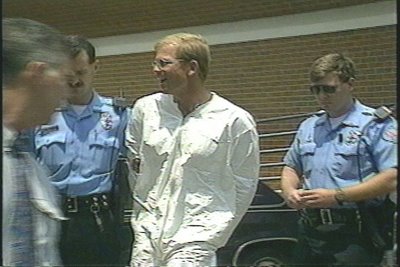
2. In the Wrath of Angels, Risen describes Paul Hill as a “national symbol of anti-abortion extremism” (346). By first attempting to validate the murder of abortion doctors, then providing encouragement to individuals considering such a murder, and finally actually committing a murder of an abortion doctor (as well as an innocent escort), Hill has certainly earned this notorious title. Abortion stirs up strong emotions in many people. Yet, thankfully, not all these people run out and attempt to shoot up abortionists. So what, then, prompts some people to behave in such abominable ways? In their article “God, Politics, and Protest,” McVeigh and Sikkink explain that several factors of religion (and, more specifically, Protestant religion) can affect a person’s actions, causing them to act in argumentative, uncommon ways. By examining Paul Hill through their analysis, we can begin to at least see, even if we can never truly understand, some of the reasons Hill behaved the way he did. The first issue to consider is Hill’s religious identity. Hill first attended a Presbyterian college and then went on to study at the Reformed Theological Seminary, where his professor was a “leader in a radical new Reconstructionist movement” (347). This reconstructionist approach to religion would have been much more supportive of protesting and public displays than some of the more traditional religions. Next we must consider how his beliefs may have led him to believe he was acting out of defense. In McVeigh and Sikkink’s article, they explain how, “religions can provide a ‘cultural toolkit’ of collectively held meanings and symbols that can be used by movement activists to legitimate the contentious tactics of protest” (1429). In other words, religions oftentimes attempt to validate their actions by claiming they are for the “common good.” In a reasoning that occasionally comes off as arrogance, religions assume that what they believe is right is ultimately right and that people, regardless of whether they share the same beliefs or religious views, should be forced to follow what is “right.” Paul Hill saw abortion as morally wrong. Therefore, he took it upon himself to make sure that other people stayed away from this “wrong.” After viewing “Whatever happened to the Human Race,” Hill began picketing in an attempt to show the world the evils of abortion. Finally, it is important to consider his role in an organization. Mob mentality is a very powerful tool and, when it affects certain people, it can have disastrous effects. After Hill’s 15 minutes of fame on Donahue, he began to friend other extremists like himself. Their hunger for revenge on these murderous abortionists fueled his own desire for retaliation and he was soon being swept away by the big ideas and influence of others.
3. After reading about Shelley Shannon’s attempted murder of an abortion doctor, I looked up articles that appeared in the New York Times on the same topic. I was actually surprised to find the NY Times article more objective, or at least more two-sided, than the Wrath of Angels. The Times article presented the story with the basic facts and offered commentary from other anti-abortion protestors. This portrayal allowed the viewer to reach their own conclusions, as well as view the attempted murder as a singular incident, as opposed to a part of the anti-abortion movement. While the Times presented the facts, Wrath of Angels gave a somewhat more biased view, making the doctor seem almost heroic in his chase after Shannon and making
http://proquest.umi.com/pqdweb?did=116513706&sid=1&Fmt=10&clientId=394&RQT=309&VName=HNP