Shealyn Fuller
Post 2
Plato
COMPOSED UPON
Earth has not anything to show more fair:
Dull would he be of soul who could pass by
A sight so touching in its majesty:
This City now doth, like a garment, wear
The beauty of the morning; silent, bare,
Ships, towers, domes, theatres, and temples lie
Open unto the fields, and to the sky;
All bright and glittering in the smokeless air.
Never did the sun more beautifully steep
In his first splendour, valley, rock, or hill;
Ne’er saw I, never felt, a calm so deep!
The river glideth at his own sweet will:
Dear God! The very houses seem asleep;
And all that mighty heart is lying still!
-William Wordsworth
I would argue that this poem by William Wordsworth excels not only as a romantic poem in its ability to provoke “emotion recollected in tranquility”, but as a work of art whose content constructively impacts the state. Its strict adherence to iambic pentameter and general rhyme scheme reflect the structure and order of the city which is so admired throughout the poem. There is an extended sentiment that organized society surpasses nature in its embodiment of goodness that is supported by the first line “Earth has not anything to show more fair” and the 5th line “The city not doth, like a garment, wear the beauty of the morning”. By capitalizing “The City” and granting it control over sunlight and atmosphere, such that it may “wear” them as it pleases, Wordsworth implies that a structured state becomes, of itself, more powerful than basic nature that is has conquered. These suggestions, along with the elevated language that brings them to life, inspire the idealistic image of a tall, proud, and gleaming achievement of mankind within the reader. It is my opinion that these emotions – pride and accomplishment - are most important to the provocation of forward motion in this state because they are widely pedaled as primary American values.
Plato might allow this poem to slide by his state’s many artistic restrictions for some of the reasons mentioned above, as well as some others. True, Wordsworth certainly fits Plato’s (or Socrates’s) label for artists as “A creator of appearances” (Chapter X, 2). The first section of the poem could be passed off as nothing but a city’s physical description as it appeared to Wordsworth. This does not offer truth, according to Plato, only an imitation. So why is it valuable?
I believe that Plato would agree that my impression of “The City” as a force beyond that of nature is one with a positive influence on the state. If included as members of the state, or of society, the people will come to feel that power by mere association. However, as it is presented in the poem, there is no way to maintain that power if one is apart from the state. This concept of unity towards a common goal is in accordance with the dialogue of Chapters 2 and 3 of Plato’s Republic, throughout which there is frequent mention of what must be done for “the public good”. This unity of purpose is also emphasized by the author’s choice of morning as the time. The city, the state, is at its greatest “majesty” when all its members are together in the common act of sleeping.

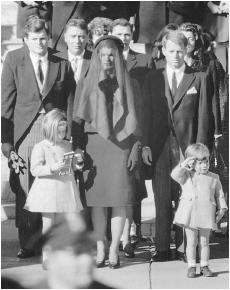
This is a photograph taken during the early 1900’s in
Plato, however, would not have such a quarrel in reaching his decision to ban this image from the eyes of his state. It is made quite clear that Plato’s republic will be one of logic and rationality rather than emotion and empathy. “That we should order our affairs in the way which reason deems them best; not like children who have had a fall, keeping hold of the part struck and wasting time setting up a howl” (Chapter X, 10) is the desired sentiment of Plato’s ideal state. Movement forward would be inhibited by those things, like this picture, that “delight in giving way to sympathy” (Chapter X, 11). His society, which would be well aware of the necessity of controlled passions and virtue (Chapter , 12), would have no need for emotional reminders like this picture and would instead be able to better themselves with logic and reason alone.


 The aftermath of the disastrous and horrific events of September 11, 2001 provided many images that demonstrate American unity and courage, among other qualities. Above is just one of the multitude of pictures taken during that day. This particular photograph captures five men rescuing a victim of the attacks. Two of the rescuers are obviously firemen, but the identities of the other three are not clear. What makes this image particularly powerful is how it demonstrates American resolve, perseverance, and unity. I believe Plato would be amenable to this photograph as a work that serves to unite the country. It depicts a common bond among five seemingly unrelated men—taking responsibility for their fellow countryman. Furthermore, the determination of these men in a very dark day in America’s history is in tune with Plato’s opinions on handling grief and emotion. Plato remarks in Book X of The Republic that, “grief stands in the way of that which at the moment is most required.” Later in the same work he says, “the feeling of sorrow which has gathered strength at the sight of the misfortunes of others is with difficulty repressed in our own [self].” The five rescuers captured in this photograph have managed to overcome what Plato terms, “a natural hunger and desire to relieve our sorrow by weeping and lamentation,” (Book X) and are carrying on to deal with the task at hand. Such a quality appears to be greatly admired by Plato, as judged from his writings in Book X of The Republic.
 Quite a different message emerges from this photograph depicting protestors with a United States flag bearing an illustration of torture superimposed upon it. In addition to the silhouetted figure being displayed on the flag, the flag is being flown upside down. According to Public Law 829 passed by the 77th Congress (frequently referred to as “The Flag Code”) the flag is never to be flown upside down, “except as a signal of dire distress in instances of extreme danger to life or property.” Regardless of how appropriate that definition might be to the protestors in the picture, the flag was likely flown upside-down in this instance as a sign of disrespect. I believe Plato would look with disdain upon both the dishonored flag itself and the image of the protestors with the flag. I draw this conclusion primarily upon Plato’s interest in building-up the nation and focusing on harmony rather than discord. However, I believe Plato would also hold a hostile view towards this image because it deals with appearances and the flag serves as an imitation, as interpreted by the protestors’ points-of-view. Since Plato speaks with hostility towards both imitation and appearances in Book X of The Republic, he would likely express a similar attitude toward this image.